
Chips
Comida preparada
- Edad sugerida
- 24 meses
- Rico en hierro
- No
- Alérgeno común
- Sí
Warning
Make sure to serve chips in an age-appropriate way, as they pose an increased choking risk for babies and toddlers.[1]
When can babies have chips?
Because they are common choking hazards, it is best to wait until around the second birthday to share chips, or whenever the child has molars and shows very strong chewing skills and the ability to listen to directions. Note that chips may contain common allergens like wheat or soy.
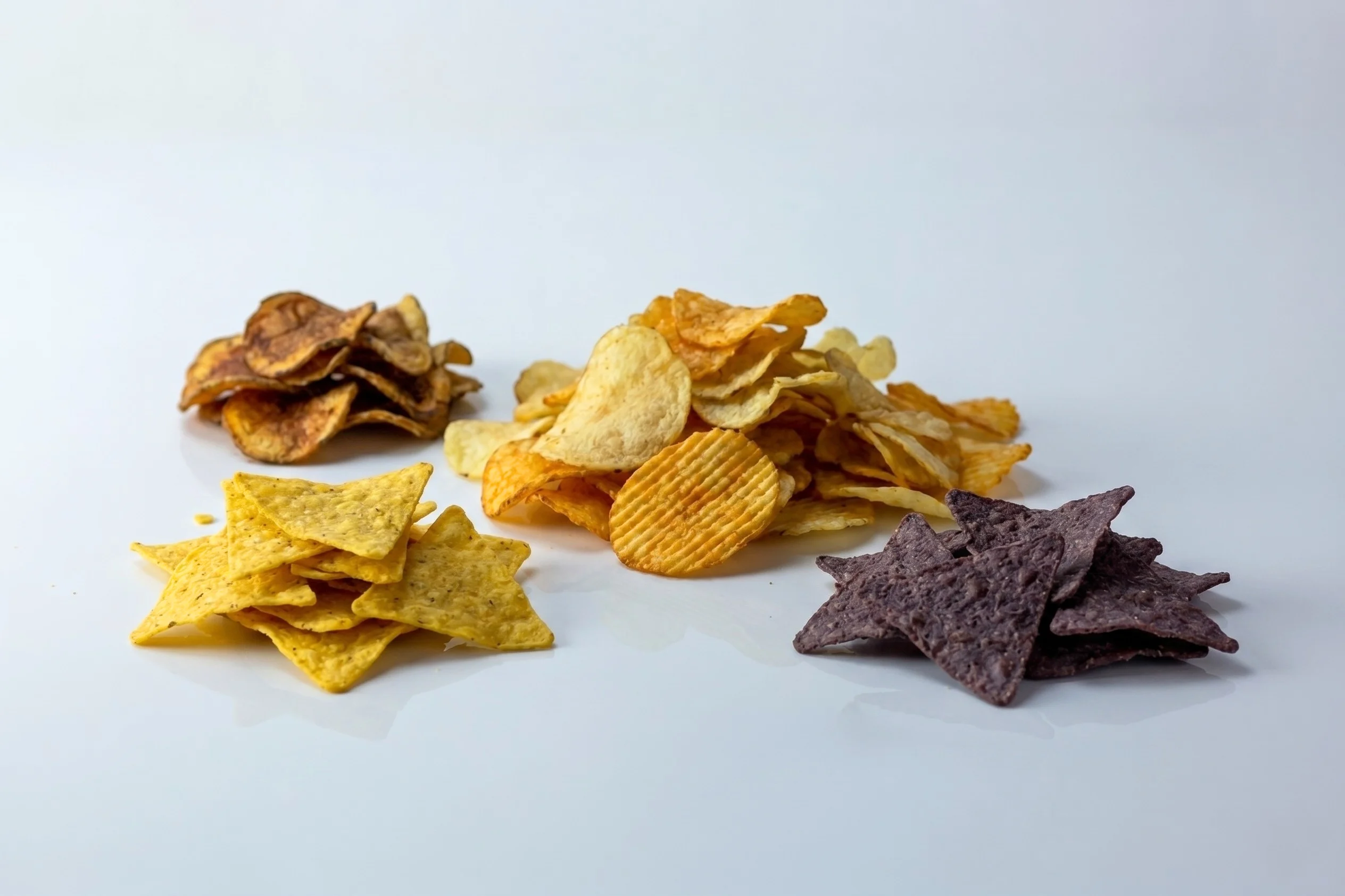
Chips—thin, crispy slices of starchy vegetables, fried or baked until brittle—exist in some form in nearly every culture in the world. In the United Kingdom and much of the Commonwealth, these chips go by the name crisps. The version most familiar in North America is perhaps the potato chip, developed in the United States in the mid-nineteenth century, but the category is much broader: tortilla chips made from corn, plantain chips common across South America and West Africa, cassava chips found throughout South and Southeast Asia and many, many more.
How do you serve chips to babies and kids?
Cada bebé se desarrolla a su propio ritmo, y las sugerencias que ofrecemos sobre cómo cortar o preparar determinados alimentos son generalizaciones para una amplia audiencia.
6 months old +:
In general, wait to share chips due to increased choking risk. However, meals that incorporate fully crushed chips as a topping or coating can be offered in moderation and as long as the coating is not too crunchy or firm, such as a chicken strip coated with finely crushed tortilla chips, baked fish with a panko-and-chip crumb coating, or a casserole with a crushed chip topping. You can also share chips that are made fully soft and mashable from a soup or other dish. Keep sodium in mind: it’s fine to share meals like these on occasion, but hold off on serving them regularly until a child is older.
24 months old +:
At this age, chips can be introduced if the child has molars and is chewing food thoroughly, spitting out food when necessary, and not overstuffing their mouth. Regardless of ingredients, consider starting off with thinner, more delicate chips and those with rounded (not pointy) edges rather than thick-cut, kettle-cooked, or extra-firm varieties, which require more chewing to break down safely. Products like Veggie Straws, Inner Peas, and other puffed, chip-like snacks may pose less of a choking risk because they dissolve a bit in the mouth, but these should still be served in moderation and only when the child is safely seated and supervised.
Try serving chips with a dip: the texture of the dip can make pieces of chip easier to manage in the mouth and has the added benefit of slowing the child down and encouraging them to dip and eat one chip at a time. Make sure the child is safely seated and supervised, not running or playing while eating, which increases choking risk. Keep sodium in mind and offer chips in moderation as part of a variety of foods in the diet.
As the child’s eating abilities develop and they gain experience managing more challenging textures, chips with sharper or more pointed edges, and thicker or firmer varieties like kettle chips, pita chips, or thick-cut tortilla chips can be introduced as long as the child is consistently chewing well and not overstuffing their mouth.
Are chips a choking hazard for babies?
Yes. Chips typically have a hard, brittle texture, sharp edges, and can break into pieces that are difficult to move around in the mouth, qualities that increase the risk of choking. Note that the texture of chips often changes when stale, which can further increase the risk of choking or aspiration. To reduce the risk, wait until the child is older and, when they are ready, serve chips in an age-appropriate way as described in How to Serve. As always, create a safe eating environment and stay within reach of the child during meals.
Learn the signs of choking and more about choking first aid in our free guides, Infant Rescue and Toddler Rescue.
Do chips contain common allergens?
It depends on the variety. Some may contain allergens such as wheat, dairy, or soy, while others are free of all common allergens. Read the label carefully to look for common allergens before sharing chips with a child.
It is important to introduce common food allergens individually and rule out a food allergy before offering a child prepared foods that contain multiple potential food allergens. This way, when you are ready to share any particular kind of chip, you will be confident that the child has already safely eaten any common food allergens in it. This approach can also help you quickly identify potential culprits in the unlikely event that the child experiences an allergic reaction after eating a chip.
Are chips safe for babies?
No. Chips in their whole, unmodified form pose an increased choking risk, making them unsafe to share with babies. In addition, their sharp edges pose a risk of scratching or hurting a baby’s mouth or throat in the case of a poorly managed bite of chip. That said, chips can be made safe for babies by crushing or grinding them and incorporating into a meal until they are no longer very firm or crunchy.
Can babies eat puffs or baby snacks that look like chips?
Yes. Puffs and dissolvable snacks marketed for babies are specifically designed to dissolve quickly in the mouth with minimal chewing and do not pose the same choking risk as conventional chips. Make sure baby is feeding themselves the food and that the puffs aren’t stale, as having food placed in the mouth and stale, chewy puffs both increase the risk of choking.
Are veggie chips healthier than regular chips for babies?
It depends. Regardless of a chip's ingredients, the choking risk is generally the same. Chips made from vegetables may offer more fiber, vitamins, and minerals compared to other chips, but most chips tend to be high in sodium.
What is the difference between chips and crisps?
In the United Kingdom and much of the Commonwealth (Australia, New Zealand, parts of Canada, South Africa, and others), crisps is the standard term for what other English-speaking parts of the world call chips, and “chips” refers to what are known in American English as french fries.
Material de referencia
Start solids with confidence
- Guided Introduction to 100+ Foods
- Smart Tools to Simplify Mealtime
- Food Allergen 101
- 300+ Meal Ideas
- First Foods® Database
Start solids with confidence
- Guided Introduction to 100+ Foods
- Smart Tools to Simplify Mealtime
- Food Allergen 101
- 300+ Meal Ideas
- First Foods® Database
Consejos de expertos directo en tu correo
Suscríbete para recibir consejos semanales, recetas y más.